
Infrastructure & fiber optic installation

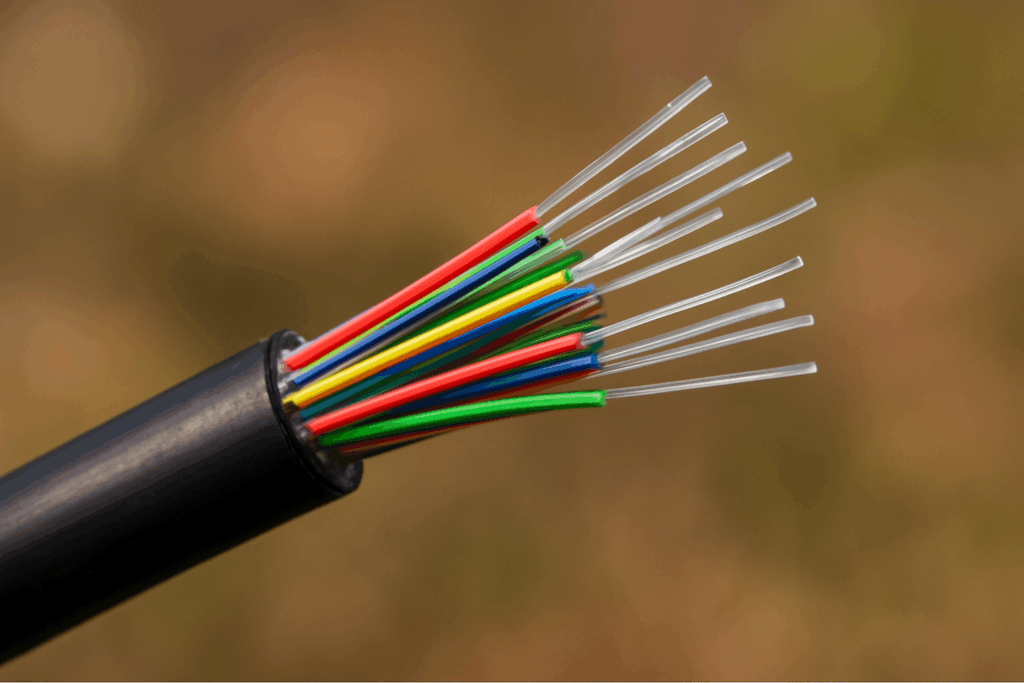
Building the Digital Backbone: Infrastructure & Fiber Optic Installation in 2025
In today’s hyperconnected world, fiber optic networks are the backbone of modern communications, powering everything from high-speed internet and cloud services to smart buildings, surveillance systems, and IoT platforms. As data demand explodes, businesses and communities that invest in solid fiber infrastructure gain a long-term competitive edge.
Below is a look at the latest trends, key considerations, and best practices for fiber optic installation — and why Lightening CCTV Installations is uniquely positioned to help build and maintain this infrastructure in South Florida.
Why Fiber Remains King
- Superior performance — Fiber optics supports extremely high bandwidth, low latency, and long-distance transmission with minimal signal loss.
- Scalability & future proofing — Once installed, fiber networks can support new generations of telecom, AI, VR, and other high-data applications without wholesale rewiring.
- Growing market & adoption — The global fiber optics market is expected to grow strongly in coming years. (Fortune Business Insights)
- Expanding fiber coverage in North America — In the U.S., more homes are now “passed” by fiber, and adoption rates continue to climb. (Fiber Broadband Association)
Given these advantages, businesses, real estate developers, municipalities, and surveillance system integrators are leaning heavily into fiber infrastructure investments.
Key Trends in Fiber & Infrastructure for 2025
1. Smarter, Faster Deployment
To reduce cost and deployment time, contractors are using AI, geospatial modeling, and automation to plan fiber routes, assess feasibility, and optimize build strategies. (The Utility Expo)
Reuse of existing conduits, utility poles, or ducts is also on the rise to minimize excavation overhead.
2. Bend-Insensitive & Ultra-Low Loss Fiber
Modern fibers are better engineered to handle tight bends (e.g. inside buildings or in complex duct layouts) without degrading signal quality. (Amerifiber)
Ultra-low-loss fiber types extend reach, reducing the need for amplifiers or repeaters.
3. Advances in Splicing, Connectivity & Components
New splicing machines, precision alignment tools, and connector technologies improve performance, lower insertion loss, and enhance reliability. (Connector and Cable Assembly Supplier)
Smaller, higher-density cables allow network operators to cram more fiber capacity into existing ducts and pathways. (Default)
4. Hybrid Fiber / Free-Space Optical (FSO) Links
In some cases, supplementing or bridging fiber with optical wireless (line-of-sight) links is becoming more viable. This hybrid approach can help reduce cost in challenging segments, such as over water or difficult terrain, while maintaining performance. (arXiv)
5. Integrity, Monitoring & AI Diagnostics
Fiber networks aren’t “install and forget.” AI-augmented diagnostic tools (e.g. for OTDR fault localization, anomaly detection) help operators quickly identify breaks, degradations, or performance drift. (arXiv)
Smart monitoring ensures uptime, reduces downtime, and makes maintenance more proactive than reactive.
6. Regulatory, Permitting & Workforce Challenges
Deploying fiber in dense urban settings, new developments, or across public rights-of-way involves complex permitting, coordination with municipalities, and compliance with utility standards. (PwC)
Additionally, there is a shortage of skilled fiber technicians and civil engineering crews, which is a growing bottleneck for expansion. (The Utility Expo)
Best Practices for Infrastructure & Fiber Deployment
If you’re considering fiber installation (for business, surveillance systems, data backhaul, or building connectivity), here are practices to observe:
- Pre-Planning & Site Surveys
Conduct a detailed survey of existing conduits, power lines, utility poles, ground structures, geotechnical constraints, and future expansion plans. - Use of Existing Infrastructure
Where possible, reuse or share ducts, conduits, or cable routes to reduce cost and minimize disruption. - Route Diversity & Redundancy
Design paths with multiple routes to reduce single points of failure. Use ring or mesh topologies when practical. - Cable Selection & Quality
Choose high-quality, bend-insensitive, low-loss fiber and robust jacket materials suitable for local conditions (e.g., UV, moisture, corrosion). - Precision Splicing & Quality Control
Use advanced splicing tools, test every connection, measure insertion loss, and document termination points. - Proper Termination, Enclosures & Protection
Use weatherproof splice enclosures, fiber distribution panels, patch panels, and secure mounting so the physical infrastructure is safe from environmental damage or vandalism. - Fiber Monitoring & Diagnostics
Implement OTDR or continuous monitoring so faults are detected early, and issues localized quickly. - Maintenance & Lifecycle Planning
Plan for cleaning, inspections, firmware/optical upgrades, and spare capacity for future expansion. - Compliance & Coordination
Acquire permits, coordinate with electrical, water, telecom utilities, respect rights-of-way, comply with local codes and utility standards.
Why Choose Lightening CCTV Installations for Fiber & Infrastructure Work
At Lightening CCTV Installations, we don’t just mount cameras — we build the backbone that supports them. Here’s how we approach infrastructure & fiber installation in South Florida contexts:
- Integrated design for surveillance & data needs — our designs consider camera, access control, and network traffic requirements all at once.
- Local knowledge & permitting experience — we know municipal and utility regulations in Broward, Miami-Dade, and Palm Beach counties.
- Quality-first fiber deployment — we use top-tier splice tools, test equipment, and practices to ensure long-term performance.
- End-to-end installation & support — from trenching, conduit, fiber pulling, splicing, terminations, to maintenance.
- Hybrid approaches when needed — combining fiber with wireless or FSO links when direct runs are difficult.
- Future-ready builds — designs with spare capacity, redundancy, and upgrade paths baked in.
Call to Action
Your surveillance, security, communications, or business network deserves more than patchwork cabling. It needs infrastructure built to last, scale, and perform.
📞 Call Lightening CCTV Installations today at 954-534-5442 to schedule a free infrastructure & fiber consultation in Pembroke Pines, Weston, Miami Gardens, Southwest Ranches, Plantation, or the surrounding region. Let us help you build the foundation for tomorrow’s high-performance network systems.